
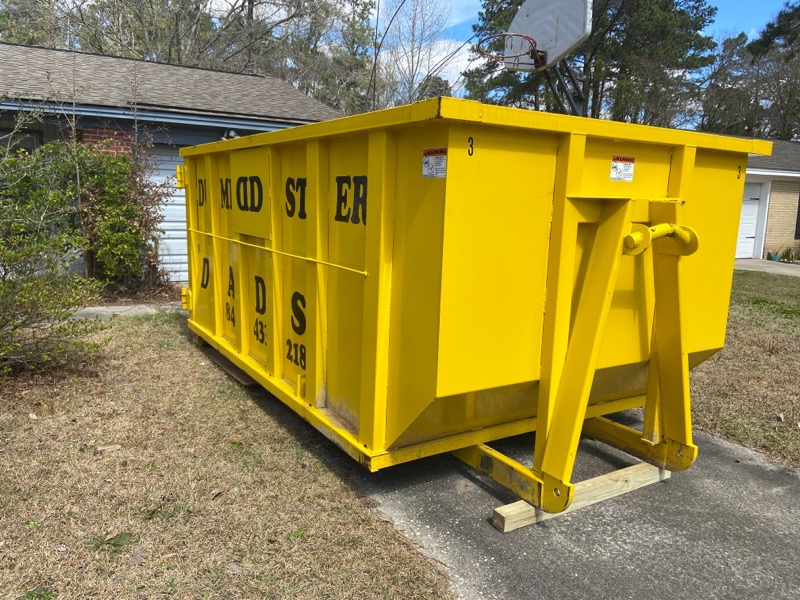
You have probably seen one without giving it a second thought. You spot the big open metal container behind a strip mall during a remodel, or parked on a construction site, piling up with the day's debris. Businesses put these to work constantly. Most people just never stop to ask what the thing is called or how it ends up in the lot.
The answer is a commercial roll-off dumpster. A business rents it to handle waste that a regular trash bin cannot begin to touch, and a special truck delivers it by rolling it right off the bed onto the ground. Once it fills up, the same truck rolls it back on and hauls the whole load away. Sizes get measured in cubic yards, and the commercial versions run bigger than anything you would drop in a driveway for a weekend cleanout.
One more thing sets the commercial version apart. It usually comes tied to an account rather than as a one-and-done rental, which changes how the whole arrangement works. That distinction is where commercial service really parts ways with residential, and it is worth understanding before you put money down on one.
How a Commercial Roll-Off Dumpster Works
There is not much to the design, which is precisely why it works. The top stays open so a crew can pitch material in fast. The rear door swings out, so you walk a heavy desk or a busted pallet straight in at ground level instead of hoisting it over a four-foot wall. A hydraulic lift on the truck sets the empty box down where you point, then winches the full one back up when you call for a swap or the last pickup.
The account changes the rhythm. A homeowner orders once and forgets it. A business keeps the box parked on-site and puts the hauler on a recurring schedule, so it gets swapped before it ever spills over. Nobody reorders every week. The waste just keeps leaving.
Commercial Roll-Off Dumpster & Residential Container
On a lot, the box looks like the one a neighbor rents for a garage cleanout. Run it for a business, though, and the gaps show fast. Size is the obvious one, since homeowners lean on 10- and 20-yard boxes while commercial work opens at 20 and climbs to 30 and 40. Service is the bigger split. A homeowner rents a container once and returns it, but a business keeps the container for weeks or months on a recurring swap schedule. Billing runs through an account, too, and a single agreement can cover a single storefront or a dozen sites at a flat rate. Even the trash differs. A gutted restaurant, a warehouse purge, and an office refit each load a box their own way, and a good hauler plans around what you are really tossing.
Common Commercial Dumpster Sizes
Most commercial waste lands in one of three sizes. Get that call right, and you stop paying for empty air or booking a second haul. The rough breakdown:
- A 20-yard box covers smaller stuff, like a single office redo, a restaurant freshening up its dining room, or a light retail clear-out. Concrete and Dirt as well.
- The 30-yard sits in the middle, good for bigger tenant turnovers, a run of construction debris, or steady waste off an active site.
- The 40-yard is for large work, meaning full demolition, a warehouse getting emptied, or a build that runs for weeks.
Then there is weight, which trips up more people than size does. Every box has a tonnage cap. Load it with something dense, say concrete or torn-off roofing, and you hit that cap while the box still looks half empty. Call out heavy material when you order, so the hauler sets the right allowance and you dodge an overage on the invoice.
Businesses Rely on Commercial Roll-Off Containers
All kinds of operations around the Omaha-Council Bluffs metro keep one on standby. Property managers and facility crews handle constant turnover waste across apartments, offices, and retail bays. Restaurants and shops drag out dead fixtures, packaging, and whatever the last remodel left behind. Contractors want a container that shows up on time and keeps pace with the build. Warehouses move through packaging and pallets at a volume no curbside bin could touch. Property management firms and commercial real estate owners rely on a set schedule whenever a tenant clears out, and a space needs to be emptied quickly. The pattern is the same underneath. The waste comes fast and steady, and a scheduled container keeps it from piling up in a corner of the lot.
Scheduled Service for Commercial Account
Here is the part that matters. The box is just steel. The service behind it is what you pay for. Miss a pickup and debris stacks up, blocks a loading dock, and becomes a safety write-up waiting to happen. A set schedule heads that off by tying the swap rhythm to how fast your waste climbs.
A local hauler you can actually reach beats a national booking line in a few plain ways:
- You get a real person who already knows your site and your account.
- Swaps and pickups run on a schedule you can plan your week around.
- The price holds steady instead of jumping with each order.
None of that sounds flashy. It is the difference, though, between a container that quietly does its job and one you have to babysit.
Before Renting a Commercial Roll-Off Dumpster
So what does a commercial roll-off dumpster come down to? Get the size right. Put it on a schedule that keeps up. Work with a hauler that answers the phone. Do that, and the container just runs in the background instead of becoming one more thing to manage.
RMS Dumpsters works with businesses across the Omaha and Council Bluffs metro on flat-rate commercial accounts, dependable scheduled service, and same- or next-day delivery. Grab a free quote, walk them through your site and what you are clearing out, and set up an account built around how your operation runs.