
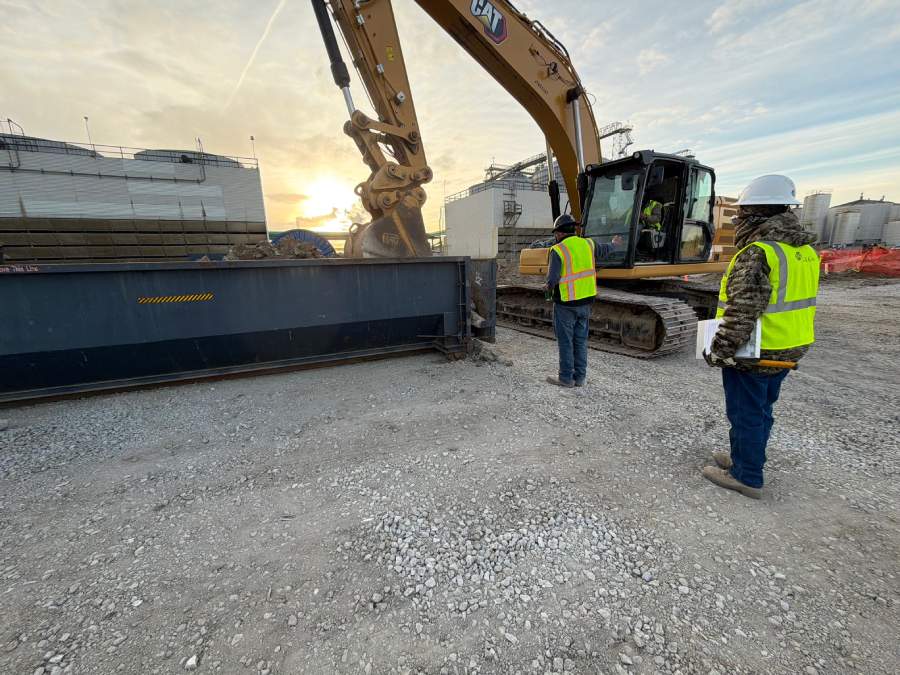
Ordering a roll-off for a jobsite is nothing like ordering one for a garage cleanout. More volume, tighter schedule, and a crew standing around if the box fills up Tuesday and the truck cannot come until Friday. Six questions, asked before you book, head off most of what goes sideways. Here they are, plus what a straight answer should sound like.
Key Takeaways
- Ask what the total runs, not the headline rate, since tonnage caps and daily fees are where jobsite budgets quietly slip.
- On an active site, swap speed beats price. A full container stops work.
- Sort out placement, permits, and banned materials before the truck shows up, not after.
Week two of the build. Tear-off is done, the framing scraps are piling up next to the pad, and the box you dropped Monday is already at the fill line. Nobody warned you it would go that fast. Now the crew is stacking debris on the ground because there is nowhere else to put it, and that pile is going to be somebody's trip hazard by Thursday.
Most of that traces back to the booking call. Search dumpster rental near me, and you get a wall of companies happy to quote you a number in thirty seconds, which is exactly the problem. The number is not what you need. You need to know what happens when the box fills early, what the load actually weighs, and who answers when the schedule moves.
Six questions cover it. Run them past whoever you are booking with, and pay attention to how quickly they answer. A hauler who works jobsites will have these down cold. One who hesitates is telling you something.
What Size Do You Need for This Scope?
Start here, because everything else hangs off it. Most people size by eye, look at the pile, guess a number, and end up either paying for a second haul or renting a mostly empty box for two weeks. Neither one is cheap.
A hauler worth using will ask about the work, not just the square footage. Roofing, demo, and framing all fill a container at completely different rates.
Tell them this much before they quote:
- The type of debris, so shingles and drywall and concrete get sized differently
- Rough square footage of the area you are clearing
- Whether the job runs in phases or all at once
- If anything heavy is going in, like brick, block, or wet shingles
What Does the Price Cover?
This is where jobsite budgets spring leaks. Some quotes cover the drop, the days, the weight, and the haul in one number. Others cover the drop and let everything else show up later on the invoice, which is a fine surprise if you are not the one signing it.
Ask flat out. Is this the price I pay, or the price before fees? Then ask what pushes it up.
Get these pinned down on the call:
- The tonnage allowance and the per-ton rate past it
- How many rental days are built in
- What a day costs if you keep it longer
- Whether delivery, pickup, fuel, and dump fees are already in there
How Fast Can You Deliver and Swap?
Here is the one that actually costs you money. A full container on an active site is a work stoppage. Your crew is not going to stand there, so the debris goes on the ground, and then somebody has to double-handle all of it later.
Same-day and next-day delivery matters. So does the swap. Ask how quickly they can pull a full box and set an empty one, and whether they run a standing schedule for longer jobs.
Worth asking before you commit:
- Turnaround on a first delivery
- How fast a swap happens once you call
- Whether they can run a set weekly rotation
- What their cutoff time is for same-day requests
Where Can the Container Legally Sit?
Placement gets treated as an afterthought right up until it becomes a problem. In Omaha, a box on the private lot you are working on usually needs no permit at all. Put it in the street, or the right-of-way, and the city wants a Street Obstruction Permit first, along with insurance naming the City of Omaha.
Council Bluffs runs its own rules, and the smaller metro towns do too. One phone call beats a citation.
Have the answers ready before delivery day:
- Whether the box sits on private property or the street
- Who is pulling the permit, you or the hauler
- Gate width and overhead clearance for the truck
- Ground conditions, because soft or muddy pads shift under a loaded box
What Materials Will You Refuse?
Every hauler has a list, and hitting it mid-project means a refused pickup and a container you cannot get rid of. Contamination fees on top of that. On a jobsite, the usual offenders are paint, solvents, adhesives, and old appliances holding refrigerant.
The EPA is clear that hazardous waste does not go in with regular trash, and no roll-off company will take it. Route that material to a proper drop-off and keep the box clean.
Confirm the banned list up front:
- Paint, solvents, and wet chemicals
- Fuels, oils, and pressurized tanks
- Tires, batteries, and electronics
- Asbestos or anything that might contain it
Who Picks Up the Phone When Plans Change?
Plans change. Weather pushes you back three days, an inspection runs long, a sub does not show. What matters then is whether you are calling a dispatcher who knows your site or a call center three states away reading from a script.
A lot of the top search results are booking brokers, not haulers. They take the order, add a markup, and hand it to whoever is free. Going direct to a local outfit skips that whole layer.
Find out who you are actually dealing with:
- Whether they own the trucks or subcontract the work
- Who you reach when you need a date moved
- How much notice they need for a schedule change
- Whether the same crew handles your account throughout
Booking a Jobsite Roll-Off Without the Guesswork
None of these questions take long. Five minutes on the phone before you book, and you have covered the four things that actually wreck a jobsite rental: wrong size, surprise fees, slow swaps, and a container sitting somewhere it should not be.
Working a job around Omaha or Council Bluffs? RMS Dumpsters runs flat-rate roll-offs with the weight and rental days built into the quote, plus same- or next-day delivery when the schedule tightens up.